Introduction
The Isle of Man TT is one of the most iconic and respected motorcycle racing events in the world. For more than a century, this extraordinary competition has attracted the finest road racers, leading motorcycle manufacturers, and passionate fans from every corner of the globe. Known officially as the Tourist Trophy, the event has earned a reputation for combining incredible speed, unmatched skill, and a level of challenge that few other sporting competitions can rival.
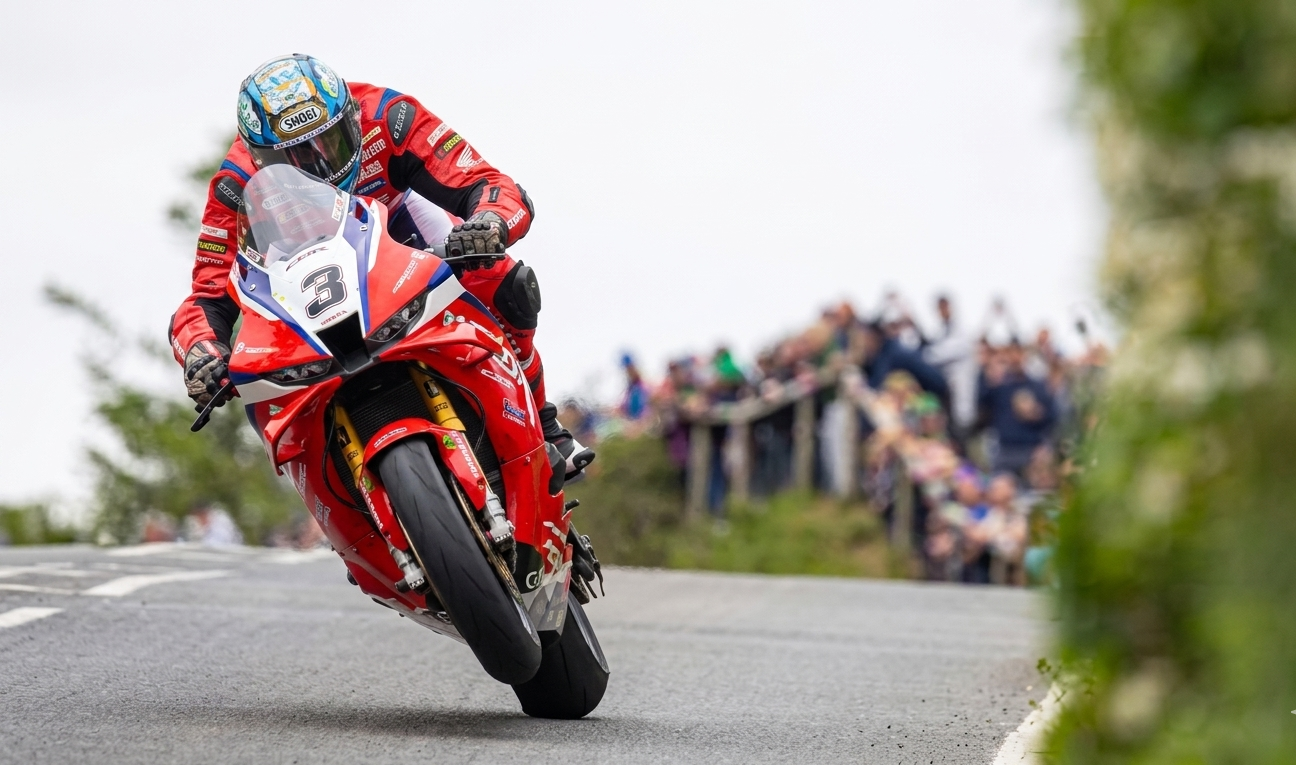
Unlike traditional motorcycle races held on purpose-built circuits, the Isle of Man TT takes place on public roads that are temporarily closed for competition. Riders race through villages, countryside roads, and mountainous terrain while reaching speeds that regularly exceed 200 miles per hour. This unique environment creates a spectacle unlike anything else in motorsport.
For many racing enthusiasts, the Isle of Man TT represents the purest form of motorcycle competition. Success at the event requires a combination of courage, experience, technical ability, physical fitness, and mental strength. Winning a TT race is considered one of the highest achievements in motorcycle racing, and those who succeed become part of a legendary sporting tradition.
This comprehensive guide explores the history, significance, challenges, riders, technology, culture, and future of the Isle of Man TT, helping readers fully understand why this event continues to fascinate millions around the world.
The Origins of the Isle of Man TT
The story of the Isle of Man TT begins during the early years of motorcycle development. At the start of the twentieth century, motorcycles were rapidly evolving, and interest in competitive racing was growing. However, legal restrictions in mainland Britain made it difficult to organize road races on public highways.
The Isle of Man offered a solution. Located in the Irish Sea between Great Britain and Ireland, the island possessed a degree of self-governance that allowed racing organizers greater freedom. In 1907, the first Tourist Trophy motorcycle race was held, marking the beginning of what would become one of the most important events in motorsport history.
The original race was designed not only to determine the fastest rider but also to test the reliability and durability of motorcycles. At that time, simply completing a long-distance race was considered a significant achievement. The event quickly gained popularity because it provided manufacturers with an opportunity to showcase their engineering capabilities while allowing riders to demonstrate their talent.
As the years passed, the Isle of Man TT became increasingly prestigious. Motorcycle companies recognized that success at the event could significantly enhance their reputation. Victories at the TT were often used as proof that a motorcycle was both powerful and dependable. This connection between racing success and commercial success helped drive technological innovation throughout the motorcycle industry.
Despite interruptions caused by global conflicts and changing economic conditions, the Isle of Man TT survived and continued to grow. Over the decades, it evolved from a regional competition into an internationally recognized sporting event that attracts attention from around the world.
Understanding the Snaefell Mountain Course
The defining feature of the Isle of Man TT is the Snaefell Mountain Course. Measuring approximately 37.73 miles in length, this circuit is unlike any other used in major motorcycle racing. Rather than being a closed racing facility, the course consists of ordinary public roads that serve local residents throughout most of the year.
The route winds through towns, villages, open countryside, and mountainous regions, creating an incredibly diverse racing environment. During a single lap, riders encounter hundreds of corners, numerous elevation changes, varying road surfaces, and constantly shifting conditions. Every section of the course presents unique challenges that demand absolute concentration.
One of the reasons the course is so famous is its complexity. Riders must memorize more than two hundred corners, each requiring specific braking points, turning techniques, and acceleration strategies. Unlike modern racetracks where runoff areas provide a margin for error, the mountain course is bordered by walls, buildings, fences, and natural obstacles. This reality increases the importance of precision and experience.
The mountain section is particularly famous. Located at higher elevations, this portion of the course offers spectacular views but also introduces unpredictable weather conditions. Riders may experience sunshine in one area and fog in another during the same lap. Such variations make the course even more demanding and contribute to its legendary reputation.
Learning the course takes years of dedication. Experienced competitors often emphasize that understanding the mountain course is one of the greatest challenges in road racing. New riders spend countless hours studying the route, watching onboard footage, and participating in practice sessions before they can compete confidently.
Why the Isle of Man TT Is Unique
The Isle of Man TT occupies a special place in motorsport because it differs fundamentally from most modern racing competitions. While many races focus primarily on machine performance, the TT demands a balance between technological excellence and human skill.
The event is conducted as a time trial, meaning riders start individually at set intervals rather than racing side by side from a standing grid. The winner is determined by the fastest cumulative race time rather than direct track position. This format creates a unique strategic challenge because competitors must focus entirely on delivering the fastest possible lap while maintaining consistency throughout the race.
Another factor that makes the TT unique is its deep connection to tradition. Although motorcycle technology has advanced dramatically, the essential character of the event remains largely unchanged. Riders continue to tackle the same roads that challenged competitors more than a century ago. This continuity creates a powerful sense of history that few sporting events can match.
The atmosphere surrounding the race also contributes to its uniqueness. The Isle of Man transforms during TT season, becoming a gathering place for motorcycle enthusiasts from around the world. Fans arrive on motorcycles, ferries become crowded with racing supporters, and the entire island embraces the excitement of the event.
The Physical and Mental Demands on Riders
Competing in the Isle of Man TT requires extraordinary physical and mental preparation. Riders must endure significant physical stress while maintaining complete concentration for extended periods.
Modern racing motorcycles generate tremendous acceleration and braking forces. Throughout a race, competitors repeatedly shift their body weight, control powerful machines, and absorb impacts caused by uneven road surfaces. These demands place considerable strain on muscles, joints, and cardiovascular systems.
Mental performance is equally important. Riders must process vast amounts of information at incredible speed. Every corner requires immediate decisions regarding braking, positioning, acceleration, and risk management. At racing speeds, hesitation can result in lost time or potentially serious consequences.
The challenge becomes even greater because races can last for extended periods. Maintaining focus throughout multiple laps of the demanding mountain course requires exceptional endurance. Many riders describe the mental aspect of TT racing as one of the most difficult challenges they have ever faced.
Preparation often begins months before the event. Competitors engage in fitness training, simulator sessions, course study, and extensive motorcycle testing. Success at the Isle of Man TT is rarely achieved through talent alone. It is usually the result of years of disciplined preparation and accumulated experience.
The Evolution of Motorcycle Technology
The history of the Isle of Man TT mirrors the evolution of motorcycle technology. Early competitors raced relatively simple machines that produced modest levels of power compared to modern motorcycles. Over time, advances in engineering transformed performance capabilities and dramatically increased average speeds.
Modern TT motorcycles represent the pinnacle of racing technology. Advanced engines generate remarkable horsepower while remaining reliable enough to withstand the demands of the mountain course. Sophisticated electronic systems help manage power delivery, traction, and braking performance, allowing riders to maximize speed while maintaining control.
Aerodynamics have become increasingly important in recent decades. Engineers carefully design fairings and bodywork to reduce drag and improve stability at high speeds. These improvements contribute to faster lap times while enhancing rider confidence.
Suspension systems have also evolved significantly. The mountain course contains numerous bumps, dips, and surface variations that require exceptional suspension performance. Modern racing motorcycles use highly advanced components that help maintain stability and traction under challenging conditions.
Tire technology represents another area of remarkable progress. Contemporary racing tires provide levels of grip, durability, and consistency that earlier generations could not have imagined. These developments allow riders to push harder while maintaining safety and control.
Despite these technological advances, the human element remains central to the event. Even the most sophisticated motorcycle cannot replace the knowledge, judgment, and skill required to master the mountain course.
Legendary Riders Who Shaped Isle of Man TT History
Throughout its long and distinguished history, the Isle of Man TT has been defined by extraordinary riders whose performances elevated the event to legendary status. These competitors not only won races but also helped shape the identity of the competition through their courage, dedication, and remarkable achievements.
One of the most celebrated figures in TT history is Joey Dunlop. Widely regarded as one of the greatest road racers of all time, Dunlop achieved an extraordinary number of victories and became a symbol of excellence within the sport. His calm personality, exceptional riding ability, and commitment to motorcycle racing earned him respect far beyond the racing community. Even years after his career ended, his influence continues to be felt throughout the Isle of Man TT.
John McGuinness represents another iconic chapter in TT history. Known for his consistency and speed, McGuinness established himself as one of the event’s most successful competitors. His ability to adapt to changing conditions and maintain elite performance over many years made him a fan favorite and a role model for aspiring racers.
Michael Dunlop has carried forward his family’s remarkable racing legacy while establishing his own place among the sport’s greatest riders. His aggressive approach and relentless determination have produced numerous memorable victories. His performances demonstrate how the modern generation continues to push the boundaries of what is possible on the mountain course.
The Isle of Man TT has also welcomed talented competitors from many different countries. Riders from across Europe, Australia, New Zealand, Japan, and other regions have traveled to the island seeking success. This international participation has helped transform the event into a truly global competition while preserving its unique traditions.
Race Categories and Classes
The Isle of Man TT features multiple race categories, each designed to showcase different types of motorcycles and riding styles. These classes provide variety for spectators while allowing manufacturers and riders to compete under different technical regulations.
The Superbike TT is often considered one of the premier races of the event. These motorcycles feature highly advanced engineering and significant performance capabilities. Riders must manage immense power while maintaining precision across the challenging mountain course. Victories in the Superbike category are highly prestigious because the competition level is exceptionally high.
The Senior TT occupies a special place within the event. Often regarded as the most prestigious race of the festival, the Senior TT has become synonymous with motorcycle racing excellence. Winning this race is considered one of the greatest achievements in road racing, and many riders view it as the ultimate goal of their careers.
Supersport races introduce a different style of competition. These motorcycles typically have smaller engine capacities than Superbikes, placing greater emphasis on rider skill, cornering ability, and race strategy. Fans often enjoy Supersport races because they can produce closely contested battles and dramatic finishes.
Superstock races highlight motorcycles that remain closer to standard production models. These events demonstrate the capabilities of motorcycles that consumers can purchase while still delivering thrilling competition. Manufacturers value success in this category because it helps showcase the performance of their production machines.
The Supertwin class has also gained popularity by featuring lightweight motorcycles that reward smooth riding and technical precision. These races add further diversity to the event and create opportunities for different types of competitors to succeed.
Safety and Modern Developments
Safety has always been a significant topic of discussion in relation to the Isle of Man TT. The nature of road racing means that competitors operate in an environment that presents unique risks compared to traditional racetracks. As a result, organizers, teams, and governing bodies have invested heavily in safety improvements over the years.
Modern riders benefit from advanced protective equipment that would have seemed unimaginable to earlier generations. Racing suits now incorporate sophisticated materials designed to resist abrasion and absorb impacts. Airbag technology has become increasingly common, providing additional protection during accidents. Helmet design has also evolved dramatically, offering improved safety while maintaining comfort and visibility.
Medical support at the event has undergone substantial development. Highly trained medical teams, rapid response systems, and specialized equipment help ensure that assistance is available as quickly as possible when needed. Communication networks and race control procedures have also become more advanced, allowing organizers to respond effectively to changing conditions.
Course management continues to evolve as well. Organizers regularly review safety measures and make improvements where possible without fundamentally altering the character of the event. This balance between preserving tradition and enhancing safety remains one of the most important aspects of the Isle of Man TT’s ongoing development.
The Spectator Experience
Attending the Isle of Man TT is an unforgettable experience for motorcycle enthusiasts. Unlike many sporting events where spectators are confined to designated grandstands, the TT offers numerous viewing locations spread across the island. This allows fans to experience different sections of the course and gain a deeper appreciation for the skills required to compete.
Watching motorcycles race through villages creates a unique atmosphere. Spectators can witness competitors accelerating past historic buildings, navigating challenging corners, and demonstrating extraordinary precision. The proximity to the action often leaves a lasting impression on first-time visitors.
The mountain section offers a completely different perspective. Here, fans can observe riders tackling open roads surrounded by dramatic scenery. The combination of natural beauty and high-speed racing creates some of the most memorable moments of the event.
Beyond the races themselves, visitors enjoy a vibrant festival atmosphere. Motorcycle exhibitions, entertainment events, rider interviews, and social gatherings contribute to the overall experience. The island becomes a meeting place for enthusiasts who share a passion for motorcycles and motorsport culture.
Economic Impact on the Isle of Man
The Isle of Man TT plays a vital role in the island’s economy. Each year, thousands of visitors travel to the island specifically for the event, generating significant revenue across multiple sectors.
Hotels, guesthouses, restaurants, transportation providers, and retail businesses all benefit from the influx of visitors. Many businesses consider the TT period one of the most important times of the year because of the increased demand for services and accommodations.
The event also creates employment opportunities and supports numerous local industries. From hospitality workers to event organizers, many individuals contribute to the successful operation of the festival. The economic benefits extend beyond the immediate race period because the event helps promote the Isle of Man as a tourist destination throughout the year.
International media coverage further enhances these benefits by showcasing the island’s landscapes, culture, and attractions to audiences around the world. This exposure encourages additional tourism and helps strengthen the island’s global reputation.
The Cultural Significance of the TT
The Isle of Man TT is more than a sporting event. It has become an important part of the island’s cultural identity and a symbol of motorcycle racing heritage. Generations of residents have grown up with the race as a central feature of local life, and many families have deep connections to its history.
For motorcycle enthusiasts worldwide, the TT represents a celebration of freedom, adventure, and technical excellence. The event embodies values that have long been associated with motorcycling, including independence, determination, and a willingness to embrace challenges.
Stories from the TT have become part of motorsport folklore. Tales of legendary victories, dramatic rivalries, and extraordinary performances continue to inspire riders and fans alike. These stories help maintain the event’s unique character and ensure that its legacy remains strong.
The cultural impact extends beyond racing. Music, photography, filmmaking, journalism, and literature have all been influenced by the Isle of Man TT. The event has inspired countless creative works that capture its excitement, history, and atmosphere.
Records and Memorable Achievements
Records play an important role in the history of the Isle of Man TT. Every generation of riders seeks to improve upon the achievements of those who came before, creating an ongoing pursuit of excellence.
Lap speed records receive particular attention because they provide a clear measure of performance. Advances in motorcycle technology, rider skill, and course knowledge have resulted in steadily increasing speeds over the years. Modern competitors regularly achieve lap times that would have been considered impossible by earlier generations.
Victory records are equally significant. Riders who accumulate multiple wins earn a place among the sport’s elite and become part of TT history. These achievements often require years of dedication and consistency, making them especially impressive.
Memorable performances are not always defined solely by statistics. Dramatic comebacks, close finishes, and displays of determination frequently become some of the most celebrated moments in the event’s history. These stories contribute to the enduring appeal of the TT and help maintain its reputation as one of the world’s most compelling sporting competitions.
The Future of the Isle of Man TT
As motorsport continues to evolve, the Isle of Man TT faces both opportunities and challenges. Advances in technology are likely to influence motorcycle design, rider equipment, broadcasting methods, and event management. These developments have the potential to enhance both competition and spectator engagement.
Digital media has already transformed the way fans experience the event. Live streaming, onboard cameras, social media content, and interactive coverage allow audiences around the world to follow the races in greater detail than ever before. This increased accessibility is helping introduce the TT to new generations of enthusiasts.
Environmental considerations and changing industry trends may also shape the future of motorcycle racing. Innovations in alternative power systems and sustainable technologies could eventually influence competition categories and motorcycle development.
Despite these changes, the core identity of the Isle of Man TT is likely to remain intact. The event’s enduring appeal comes from its combination of history, challenge, and authenticity. As long as riders continue to test themselves against the mountain course, the TT will retain the qualities that have made it famous for more than a century.
Conclusion
The Isle of Man TT stands as one of the most extraordinary events in the history of motorsport. Since its beginnings in 1907, it has evolved into a global symbol of motorcycle racing excellence while preserving the traditions that make it unique. The combination of the challenging Snaefell Mountain Course, world-class competitors, passionate fans, and rich heritage has created a sporting spectacle unlike any other.
What sets the Isle of Man TT apart is not simply the speed of the motorcycles or the prestige of the victories. It is the extraordinary commitment required from everyone involved. Riders dedicate years to mastering the course, teams invest countless hours preparing their machines, and fans travel great distances to witness the action firsthand. Together, they create an event that transcends ordinary competition.
More than a century after the first Tourist Trophy race, the Isle of Man TT continues to inspire admiration and respect throughout the world. Its history, culture, and enduring spirit ensure that it remains one of the greatest and most fascinating motorcycle races ever created. For anyone interested in motorsport, understanding the Isle of Man TT means appreciating a remarkable tradition that represents the very best of motorcycle racing.